Understanding a mixed acid-base imbalance With an Anion Gap?
Understanding the Anion Gap?
The anion gap is a derived value that assists clinicians in interpreting electrolytes and detect hidden acids in the blood. It is calculated from common serum chemistry measurements, especially sodium and chloride, along with bicarbonate. In basic terms, the anion gap shows the difference between measured positively charged and negatively charged particles in the blood.
Most often, the calculation uses serum sodium and serum chloride with serum bicarbonate to show whether there are unmeasured anions present. When the gap is high, it suggests additional acids in the circulation. When it is normal, the underlying problem may be due to bicarbonate loss or a chloride shift rather than accumulation of extra acids.
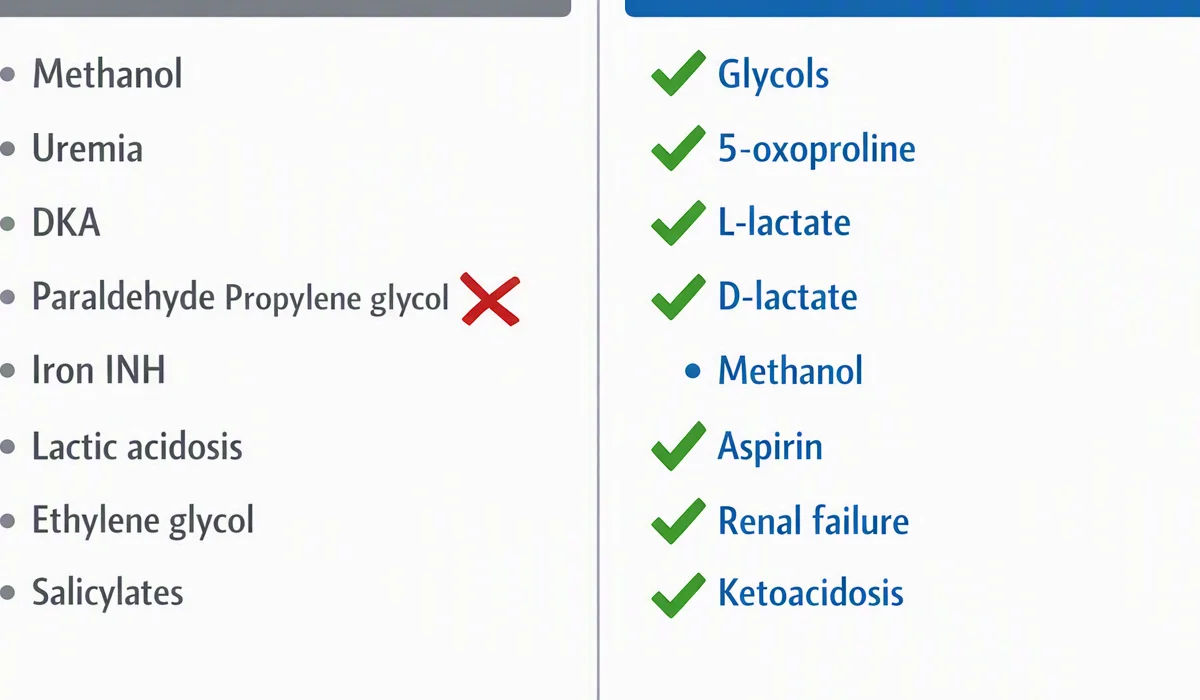
This concept is important because the anion gap is more than a number. It is a guide in acid-base interpretation, especially when evaluating a patient whose acid-base balance may be disturbed. An abnormal value can point toward an underlying cause such as lactic acidosis, diabetic ketoacidosis, renal failure, or exposure to toxins.
In practice, the anion gap is part of a broader diagnostic approach. It is interpreted alongside the electrolyte panel, blood gas results, and the patient’s overall clinical presentation. By itself, it does not give the full answer, but it provides a essential first step in the differential diagnosis.
How a Complex Acid-Base Disturbance Develops
A mixed acid-base disorder occurs when several primary acid-base mechanisms are present at the same time. This differs from a single disorder with expected compensation. In a true mixed disorder, the body is not just responding normally to one problem; instead, there are separate processes pushing the pH in different directions.
One common combination is metabolic acidosis with respiratory alkalosis. The metabolic problem lowers bicarbonate and often makes the patient acidotic, while the respiratory process lowers carbon dioxide through faster breathing. Together, these can make the blood gas picture more complex than a single disorder would suggest.
Another common issue is that compensation may appear inappropriate. For example, if a patient has metabolic acidosis, the lungs should lower PaCO2 as a form of respiratory compensation. If the measured PaCO2 is much lower or higher than expected, that finding suggests an additional disorder. The same idea applies to metabolic alkalosis and other patterns.
Mixed disorders are often suspected when the pH is not as extreme as expected, or when the laboratory values do not fit one diagnosis neatly. A patient may be in an acidotic state from one process and simultaneously more alkaline from another. That is why careful blood gas interpretation is essential.
Understanding compensation is key. The body tries to restore equilibrium through metabolic compensation or respiratory changes, but compensation has limits. When values look inconsistent, the clinician must consider a mixed disorder rather than assuming one primary problem.
How to Operate an Anion Gap Calculator
An Anion Gap Calculator is a helpful tool for structuring the numbers that are important in acid-base analysis. It assists determine the anion gap from routine laboratory values and often supports recognition of a corrected anion gap when albumin is low. This is especially useful when the clinical picture indicates a mixed disorder but the initial gap appears normal or borderline.
To apply the calculator, enter the available serum values, including serum sodium, serum chloride, and serum bicarbonate. Some calculators also require albumin so they can perform anion gap correction. Because albumin is a major unmeasured anion, low albumin can falsely decrease the apparent gap and mask a true high anion gap state.
The corrected result counts. A patient with low albumin may appear to have a normal anion gap even when extra acids are present. Using albumin in the calculation enhances accuracy and helps distinguish a true normal anion gap pattern from an underestimated high anion gap state.
In a diagnostic setting, the calculator should be used as part of a careful evaluation. It is not enough to know the number; you must interpret it in context. Ask whether the laboratory values fit the expected physiology, whether the blood gas confirms the pattern, and whether the clinical clues point to a specific underlying cause.
For best results, pair the calculator with a full assessment of the serum chemistry and arterial blood gas. That combination supports faster recognition of mixed disorders and reduces the chance of missing a second process.
Analysis of Elevated vs Typical Anion Gap
An increased gap usually indicates Learn more undetected acids in the blood. This is the classic high anion gap profile and often anion gap in chronic kidney disease reflects build-up of lactate, ketones, or other organic acids. In contrast, a normal anion gap profile suggests bicarbonate loss or a change in chloride balance rather than a accumulation of unmeasured acids.
Two major causes of high anion gap acidosis are lactic acidosis and ketones. Lactic acidosis may develop in shock, severe illness, hypoxia, or tissue hypoperfusion. Ketones are often seen in diabetic ketoacidosis and other starvation-related states. Both conditions can cause significant acid-base disturbances and may coexist with another disorder.
Normal anion gap acidosis is often associated to gastrointestinal bicarbonate loss or renal tubular issues, but the key point is that a normal value does not exclude a mixed acid-base disorder. A patient can have a normal gap and still have multiple processes affecting pH, bicarbonate, and PaCO2 at once.
When the gap is unexpectedly normal, albumin should be checked and a corrected anion gap calculated. Low albumin can mask a high gap. That is why interpretation without correction may overlook an important metabolic problem.
In mixed disorders, the elevated or normal gap is only one part of the story. The blood gas and the clinical context determine whether the abnormality is isolated or combined with another process.
Typical Overlapping Acid-Base Patterns
Several combinations appear repeatedly in day-to-day practice. A common pattern is metabolic alkalosis plus a raised anion gap metabolic acidosis. This pattern may happen when throwing up or diuretic use raises bicarbonate while another process, such as lactic acidosis, lowers it. The end result can look deceptively small on initial testing.
Another classic classic combination includes lactic acidosis with respiratory alkalosis. Patients with sepsis, liver disease, pain, anxiety, or early shock may breathe rapidly and reduce PaCO2 while also creating excess lactate. The blood gas can seem mixed because one disorder is metabolic and the other is respiratory.
Loose stools can cause a normal gap metabolic acidosis from bicarbonate loss, and if the patient is also vomiting or volume depleted, a second process may be present. In this situation, the apparent acid-base picture may shift toward a mixed disorder rather than a single isolated defect.
Renal failure is another common setting. Uremia can cause high anion gap metabolic acidosis, while treatment, vomiting, or fluid shifts can produce overlapping metabolic alkalosis. This can lead to a complicated interpretation that requires careful review of all laboratory values.
Such patterns matter because mixed disorders often reflect more than one underlying cause. A patient with diabetic ketoacidosis, for example, may also have vomiting, leading to metabolic alkalosis that partly offsets the acidosis. The Anion Gap Calculator helps detect the metabolic component, but the clinical picture explains the overlap.
Sequential Method to Identification
A systematic method renders evaluation much more reliable. Start with the arterial blood gas and overall blood gas analysis. Review the pH at the outset, then assess PaCO2 and bicarbonate. This helps determine whether the patient is acidemic, alkalemic, or near normal despite abnormal processes.
Next, calculate the anion gap from the serum chemistry. If the gap is elevated, consider high anion gap causes such as lactate, ketones, renal failure, or toxins. If it is normal, look for bicarbonate loss, chloride retention, or a hidden high gap masked by low albumin.
The delta gap is particularly useful when the anion gap is elevated. It compares the rise in anion gap with the fall in bicarbonate. If the change in gap is higher than expected, a metabolic alkalosis may also be present. If the bicarbonate drop is greater than expected, a second acidosis may coexist. This makes the delta gap a effective tool for identifying a mixed acid-base disorder.
Following the math, perform a careful clinical evaluation. Ask what the patient is losing, retaining, or generating. Look for signs of vomiting, diarrhea, hypoperfusion, sepsis, kidney injury, intoxication, or diabetic crisis. The numbers are important, but the diagnosis depends on connecting them to the situation.
A solid diagnostic approach uses both calculation and context: the Anion Gap Calculator identifies the pattern, while blood gas interpretation explains whether more than one disorder is present.
Finally, decide whether the pattern fits compensation alone or requires a second diagnosis. If the PaCO2 does not match the expected response, or if the gap logic does not align with the bicarbonate change, a mixed disorder becomes more likely.
When a mixed acid-base disorder Should Be Suspected
A combined disorder should be suspected any time the pH, bicarbonate, and PaCO2 do not fit a one predictable trend. The first clue may be an abnormal pH that is milder than expected, or laboratory values that appear incongruent. In these cases, the body may be responding with expected compensation to one disorder while a second disorder is present at the same time.
For example, if bicarbonate is low but PaCO2 is also low more than what would normally be expected, respiratory alkalosis may be occurring alongside metabolic acidosis. If bicarbonate is high but PaCO2 is not elevated adequately to match compensation, a mixed process may also be present. These discrepancies are common reasons for further assessment.
Another clue is a patient with symptoms that suggest more than one process. Someone may be vomiting and also septic, or have renal failure and hyperventilation. The lab values may show both acid-base disturbance and partial compensation, making interpretation more complex.
Because compensation has limits, abnormal values should not automatically be dismissed as the body “trying to catch up.” Instead, compare the measured PaCO2 and bicarbonate to the expected response. If they do not align, a second disorder should be considered.
In practice, suspicion rises when the patient has an elevated or corrected anion gap, a pH that does not match the severity of illness, or a blood gas pattern that suggests more than one active process. That is the point where a systematic evaluation becomes essential.
Frequently Asked Questions
How does a combined acid-base disorder with an anion gap mean?
This means that more than one acid-base mechanism is affecting the patient at the same time, and the anion gap suggests that one of those processes involves unmeasured acids. A patient may have metabolic acidosis from a high gap condition and another disorder such as respiratory alkalosis or metabolic alkalosis that changes the overall pH pattern. The result is a blended disturbance rather than a single isolated abnormality.
In what way does an Anion Gap Calculator help detect mixed disorders?
An Anion Gap Calculator organizes the relevant serum chemistry values and helps identify whether the patient has a high or normal gap. It also includes albumin correction, which can reveal a hidden high gap when albumin is low. When paired with blood gas results, it helps clinicians determine whether the numbers fit one disorder or several overlapping ones.
Why is it important that the anion gap be corrected for albumin?
Albumin is a major unmeasured anion, so low albumin can make the gap appear falsely normal. Corrected anion gap calculation helps account for this effect and improves interpretation. Without correction, a true high anion gap state may be overlooked, especially in patients who are ill or have abnormal nutrition or liver function.
May a normal anion gap still occur in a mixed acid-base disorder?
Absolutely. A normal anion gap does not exclude a mixed acid-base disorder. One process may be causing bicarbonate loss while another is influencing pH or PaCO2. Also, low albumin can hide a high gap unless the value is corrected. That is why the full clinical and laboratory picture counts more than the gap alone.
What disorders most commonly cause a high anion gap mixed disorder?
Common causes include lactic acidosis, diabetic ketoacidosis, renal failure, and toxins. These conditions can coexist with vomiting, hyperventilation, or other changes that create metabolic alkalosis or respiratory alkalosis. The result is a mixed pattern that requires careful review of pH, bicarbonate, PaCO2, and the corrected anion gap.